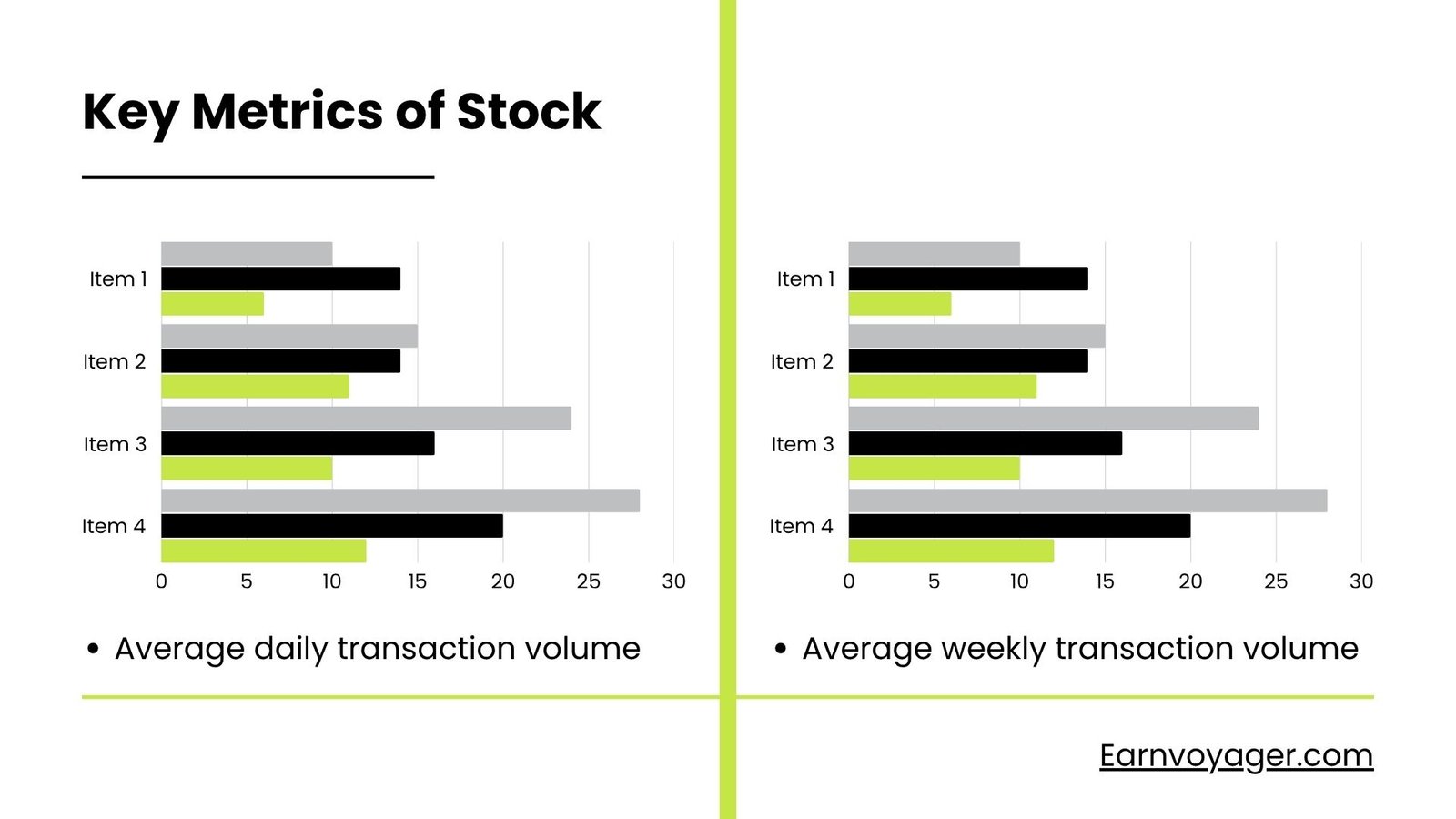
Key Metrics of Stock Fundamentals: Stock fundamentals, also called stock metrics, are the key figures that show a firm’s financial health, such as cash flow, return on assets (ROA), and profitability.
Defining Stock Fundamentals
These measurements are used in fundamental analysis to determine a stock’s underlying value and identify the factors most likely to affect its price. Understanding stock fundamentals will help you make better investment decisions based on actual financial knowledge rather than conjecture.
How Stock Fundamentals Work
Fundamental analysis, in the most general sense, is the examination of any data likely to affect the price or perceived value of a stock. And this is not stock trading patterns by any stretch of the imagination. As the name suggests, it is a return to fundamentals.
Fundamental analysis is to build a picture of the firm, to establish the fundamental value of its shares, and to purchase or sell the stock on this basis. Here are some of the most often utilized indicators to measure a company’s fundamentals:
- Cash flow
- Return on assets
- Conservative gearing
- History of profit retention for funding future growth
- The soundness of capital management for the maximization of shareholder earnings and returns
Fundamental analysts take a static approach to analyzing stock performance. They look at a range of elements they think affect how a stock performs. This involves the industry, competitors, the company’s management structure, income and sales, and development potential.
Real-World Application of Stock Fundamentals
All of the data is public and publicly accessible, usually via a company’s financial filings. The idea is to see which equities the market is valuing appropriately and which stocks it is valuing poorly.
To assist you in understanding, let’s utilize the following comparison. Imagine the stock market as a shopping mall. Stocks are the merchandise sold in stores. They are just looking at the items in the mall. Shoppers are viewed as irrational, emotional mobs who have no idea what the merchandise they are buying is really worth.
Fundamental analysts creep through the shops looking for bargains. When the mob has passed the PCs, have them notice the PCs they passed by and gaze at them a little more closely.
Fundamental analysts may attempt to determine the scrap value of a PC stripped down to its hard drive, memory cards, monitor, and keyboard. So, in the stock market, you do the same thing and calculate a firm’s book value (liquidation price).
These experts also closely examine the PC’s quality. Is it going to hold up, or will it fall apart in a year? The basic analysts will check the specs, review the manufacturer’s warranty, and examine customer reports. Just like stock analysts, they look for financial soundness in the company’s balance sheet.
Key Metrics of Stock Fundamentals: Then, fundamental analysts may attempt to explain the PC’s performance in terms of, for example, processor power, memory, or picture resolution. They are like the profits and dividend projection from a company’s income statement.
Finally, fundamental analysts will gather all the data and determine the intrinsic value, or the worth independent of the current selling price. When the sales price falls below the PCs’ inherent worth, fundamentalists will purchase them. Otherwise, they will sell the PCs they currently own or wait for prices to decrease before purchasing more.
Important Considerations When Analyzing Stock Fundamentals
Fundamental analysis might be a lot of effort, but that’s probably part of the attraction. Investors who analyze a company’s financial statements and future expectations may learn enough to determine when the stock price is inaccurate.
These careful investors can see the market’s errors and profit from them. And purchasing firms for their fundamental, long-term worth safeguards investors from the perils of day-to-day market gyrations.
Key Metrics of Stock Fundamentals: But even if a company is cheap according to fundamental research, it may not trade at its real value anytime soon. But it is not that easy. In actuality, the stock price behavior continually challenges most of the stock holdings. Even the most independently minded investor might begin to doubt the value of basic study. There is no secret equation to calculate intrinsic value.
When the market is flourishing, it is easy to delude yourself into believing you have a gift for spotting winners. But in a falling market, when the prognosis is unclear, investors can’t count on luck. They really need to know what they’re doing.
Comparing Fundamental and Technical Analysis Techniques
Technical analysis is a far cry from its cousin, fundamental analysis.Technical analysis focuses on a company’s trading and price history, using trading signals and other analytical tools to assess a stock’s strength or weakness, while Fundamental analysis concerns the inherent worth of a business.
Technical analysts believe that a stock’s past performance, including its price and trading activity, may help indicate where it will go in the future. The philosophy of technical analysis is predicated on the premise that price movement is not random. Instead, it argues that recognizable patterns and trends recur over time.
To illustrate, let us go back to the example above. Technical experts neglect the options available. Instead, they watch the crowds as a pointer to what to purchase. So, if the technical analyst sees buyers flocking to a computer store, they would try to acquire as many PCs as possible, wagering that the rising demand will drive PC prices up.
What Are the 4 Basic Elements of a Stock?
The four essential stock factors are the price-to-book (P/B) ratio, price-to-earnings (P/E) ratio, price-to-earnings growth (PEG) ratio, and the dividend yield. These indicators, along with other data, may help investors estimate a company’s value.
What’s the Difference Between Value and Growth Investing?
Value investing is the idea of finding stocks trading below their intrinsic value. Growth investing is the strategy of investing in stocks of firms expected to grow rapidly. Value equities tend to be less costly and less risky than growth companies.
How Risky Is Value Investing?
Value investing is frequently seen as a less hazardous strategy than other methods by investors and experts. But there is no such thing as a risk-free investment. One possible danger in value investing is that a company’s lower price may be right.
The Bottom Line
Fundamental analysis is the process of measuring a firm’s intrinsic value by examining its key financial metrics. The aim is to find stocks that could be undervalued in the market. This strategy is widely used by investors such as Warren Buffett to inform their judgments, looking for opportunities where a firm’s true value exceeds its current market price.