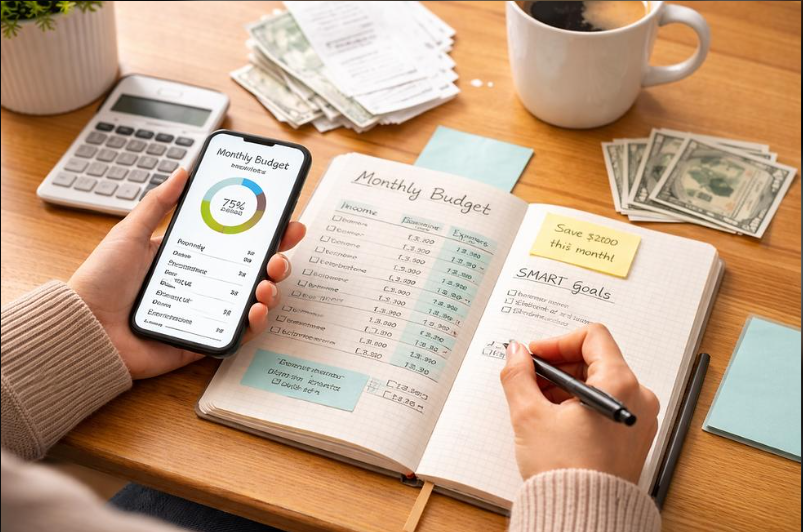
Creating a monthly budget is one of the most effective ways to manage your money, control spending, reduce financial stress, and achieve your financial goals. Whether you earn a regular salary, work as a freelancer, run a small business, or have a limited income, a budget can help you understand where your money goes and how to use it more wisely.
Many people struggle financially not because they earn too little alone, but because they do not have a clear plan for managing their income and expenses. Without a budget, it is easy to spend money on unnecessary purchases, forget upcoming bills, or reach the end of the month without enough money for essential needs.
A monthly budget provides a clear picture of your financial situation. It helps you identify your priorities, plan for regular expenses, prepare for emergencies, and save toward future goals.
The good news is that creating a budget does not require advanced financial knowledge or expensive software. You can start with a notebook, a spreadsheet, or a budgeting application.
In this article, we will explain how to create a monthly budget step by step, provide practical examples, and discuss common budgeting mistakes to avoid.
Step 1: Calculate Your Total Monthly Income
The first step in creating a monthly budget is determining how much money you receive each month. Your income provides the foundation for every financial decision you make.
Start by listing all your regular sources of income. These may include your salary, freelance payments, business profits, rental income, or eligible benefits and other reliable payments.
If you receive a salary, use your take-home pay rather than your gross salary. Take-home pay is the amount you receive after taxes and other deductions.
For example, if your monthly salary is £2,000 before deductions but you receive £1,650 after deductions, your budget should generally be based on £1,650.
If your income changes every month, such as when you work freelance or earn commissions, review your previous earnings to estimate a conservative monthly amount. Avoid building your budget around an unusually high-income month.
Knowing your actual income helps prevent overspending and ensures that your planned expenses are realistic.
Step 2: List All Your Monthly Expenses
After calculating your income, identify everything you spend money on during a typical month.
Start by reviewing your bank statements, receipts, bills, and payment records. This can help you identify expenses that you might otherwise overlook.
Your expenses may include:
- Rent or mortgage payments.
- Groceries and household supplies.
- Electricity, gas, water, and internet.
- Transportation and fuel.
- Phone bills.
- Insurance payments.
- Debt repayments.
- Childcare and education.
- Healthcare and personal care.
- Entertainment and eating out.
- Savings and emergency funds.
Remember to include expenses that do not occur every month. For example, vehicle maintenance, annual insurance, school supplies, and holiday costs may arise only occasionally.
You can estimate the monthly amount for predictable annual expenses by dividing the expected yearly cost by 12. If an annual bill is £360, setting aside £30 per month can help you prepare for it.
Listing your expenses gives you a clearer understanding of your financial responsibilities and helps you identify opportunities to reduce costs.
Step 3: Separate Needs From Wants
One of the most important budgeting skills is distinguishing between essential expenses and optional spending.
Needs are expenses required to maintain your basic living standards, health, safety, and responsibilities. These commonly include housing, basic food, essential utilities, necessary transportation, and required debt payments.
Wants are expenses that may improve your lifestyle but are not always essential. Examples include premium subscriptions, frequent restaurant meals, expensive clothing, and entertainment purchases.
However, the distinction depends on your circumstances. For example, internet access may be essential for someone who works remotely or studies online.
Create two lists: one for essential expenses and another for nonessential spending. Review the second list to identify expenses you can reduce, pause, or eliminate.
The purpose is not to remove every enjoyable activity from your life. It is to make sure that your essential needs and important financial goals receive priority before optional purchases.
Step 4: Choose a Budgeting Method
There are several ways to organise a monthly budget. Choose a method that matches your income, expenses, and personal preferences.
The 50/30/20 Budget Rule
The 50/30/20 method divides your take-home income into three main categories:
- 50% for needs: Housing, groceries, utilities, and essential transportation.
- 30% for wants: Entertainment, hobbies, dining out, and other optional expenses.
- 20% for savings and debt repayment: Emergency savings, future goals, and additional payments toward debt.
For example, if your monthly take-home income is £2,000, the suggested allocation would be £1,000 for needs, £600 for wants, and £400 for savings and debt repayment.
This is a guideline rather than a strict rule. If you live in an expensive area or earn a low income, your essential expenses may account for much more than 50% of your income.
The Zero-Based Budget
A zero-based budget assigns every pound of your income to a planned purpose. This includes bills, groceries, savings, debt payments, and personal spending.
The goal is for your income minus your planned allocations to equal zero.
For example, if you earn £1,800 and allocate the entire amount across your expenses and savings categories, you have a zero-based budget.
This does not mean you must spend all your money. Savings count as an allocation, so money assigned to savings remains available for future use.
The Pay-Yourself-First Method
This method involves setting aside a realistic savings contribution when you receive your income, then using the remaining money for planned expenses.
It can be helpful if you have difficulty saving what remains at the end of the month.
Choose the method that makes it easiest for you to track spending and maintain consistent financial habits.
Step 5: Set Realistic Savings Goals
A good monthly budget should not focus only on paying bills. Whenever your circumstances allow, it should also help you prepare for future needs.
Start by identifying your most important savings goals. These might include building an emergency fund, saving for education, purchasing a necessary item, moving home, or preparing for retirement.
Make your goals specific and realistic.
For example, instead of saying, “I want to save more money,” you could decide to save £300 over six months. This would require setting aside £50 per month.
If your income is limited, begin with a smaller amount. Even £5 or £10 per month can help establish a savings habit.
An emergency fund is often a useful first priority because it can help cover unexpected expenses without relying on expensive borrowing.
If you cannot currently afford to save because essential costs exceed your income, focus first on meeting your basic needs and exploring available financial assistance or ways to improve your income.
Step 6: Set Spending Limits for Each Category
Once you know your income, expenses, and goals, assign a spending limit to each budget category.
For example, you might decide to spend a specific amount on groceries, transportation, household bills, and entertainment.
Your limits should be based on realistic costs rather than figures that look good on paper.
If you typically spend £250 per month on groceries, immediately reducing the budget to £100 may be impractical. A gradual reduction may be easier to maintain.
Look for achievable adjustments, such as planning meals, comparing prices, reducing food waste, or preparing meals at home more frequently.
You can also set weekly spending limits for categories where it is easy to overspend. If your monthly discretionary spending limit is £120, a weekly limit of approximately £30 can help you stay on track.
Clear spending limits make it easier to recognise when you need to adjust your habits before your money runs out.
Step 7: Create Your Monthly Budget Plan
Now combine your income, expenses, savings, and spending limits into a single budget.
Here is an example of a monthly budget for someone earning £2,000 after deductions.
| Budget category | Monthly amount |
|---|---|
| Rent and housing | £750 |
| Groceries | £250 |
| Utilities and household bills | £150 |
| Transportation | £120 |
| Phone and internet | £50 |
| Debt repayments | £150 |
| Personal and entertainment expenses | £130 |
| Emergency savings | £150 |
| Long-term savings | £100 |
| Irregular expenses fund | £100 |
| Other essential expenses | £100 |
| Total planned allocation | £2,000 |
In this example, the person allocates £250 per month to emergency and long-term savings combined. They also set aside £100 for irregular expenses.
The figures are illustrative and should be adjusted to reflect your actual housing costs, family responsibilities, debt obligations, and income.
If your expenses exceed your income, review optional spending first. If essential costs still exceed your available money, you may need to investigate benefits, negotiate payment arrangements, or find ways to increase your income.
Step 8: Choose a Tool to Track Your Budget
You do not need expensive software to manage a monthly budget. Several simple tools can help you record and review your finances.
Notebook: Write down your income, expenses, savings goals, and spending limits. This is a simple option if you prefer doing calculations manually.
Spreadsheet: Use Microsoft Excel or Google Sheets to organise expenses into categories and calculate totals automatically.
Budgeting application: Some applications can categorise transactions and provide spending summaries. Check their fees, privacy practices, and account-access permissions before connecting your financial accounts.
Banking application: Your bank may provide spending categories, transaction histories, balance alerts, or tools for tracking bills.
Choose a tool that is easy to use consistently. The most effective budgeting system is one that you understand and are willing to update regularly.
Step 9: Monitor Your Spending Throughout the Month
Creating a budget is only the beginning. You must also check whether your actual spending matches your plan.
Review your transactions regularly, ideally several times a week. Record purchases and compare the remaining money with your planned limits.
For example, if your grocery budget is £250 and you have already spent £200 halfway through the month, you have £50 remaining. Knowing this early gives you time to adjust your shopping plans.
If you overspend in one category, consider whether you can reduce spending elsewhere without affecting essential needs.
Do not automatically take money from your emergency fund to cover avoidable overspending. Instead, identify what caused the problem and adjust your budget where necessary.
Regular monitoring helps you catch financial problems early rather than discovering them when a bill becomes due.
Step 10: Automate Bills and Savings Where Possible
Automation can make budgeting easier by reducing the need to remember every payment.
If your income is predictable, consider arranging automatic payments for regular bills and a manageable transfer to your savings account.
Schedule payments around your payday and check that enough money will be available in your account. Some providers may charge fees for missed payments or insufficient funds.
If your income varies, you may prefer to transfer savings manually after checking your essential obligations.
Automation should support your budget rather than create additional financial pressure. Keep track of payment dates, account balances, and any changes in your bills.
Step 11: Plan for Unexpected Expenses
Even a carefully prepared budget cannot predict every financial challenge.
Unexpected expenses may include urgent repairs, medical costs, replacement household equipment, or temporary reductions in income.
To prepare, create an emergency savings category and contribute what you can afford. If you have regular but irregularly timed expenses,